
Slipped Disc (Herniated Disc)

Department of Interventional Pain Management | AREVA Hospital
Monday to Saturday: 10:30 AM to 1:00 PM & 5:00 PM to 7:00 PM
Phone: +91 799 0420 149 (By Appointment)
A slip disc, medically known as a herniated or prolapsed intervertebral disc, occurs when the soft inner material of a spinal disc pushes through a weakened or damaged outer layer. This may irritate or compress nearby spinal nerves, causing back or neck pain that can radiate into the arms or legs.
Causes & Risk Factors
- A slip disc may develop due to a combination of age-related changes, disc wear and mechanical stress. Common causes and contributing factors include:
- Age-related disc degeneration: Discs gradually lose water content and flexibility, making them more susceptible to herniation.
- Improper Lifting: Lifting heavy objects with poor technique or while twisting the spine.
- Sudden Strain or Injury: A fall, accident or abrupt movement that places excessive stress on the spine.
- Repetitive Spinal Stress: Frequent bending, twisting or heavy physical work.
- Excess body weight: Increases mechanical stress on the spine.
Symptoms
- Symptoms vary depending on the location of the affected disc and whether a spinal nerve is irritated or compressed.
- Neck or lower back pain
- Pain radiating into the arm, hand, buttock or leg
- Shooting, burning or electric-shock-like pain along a nerve pathway
- Tingling, numbness or altered sensation
- Muscle weakness in the affected limb
- Pain aggravated by coughing, sneezing, bending or certain movements
- Difficulty sitting, standing, walking or performing daily activities
- Some people have a disc herniation on imaging without experiencing any symptoms.
How Slipped Disc (Herniated Disc) is Diagnosed?
Diagnosis usually begins with a detailed medical history & clinical examination,
Location & nature of pain
Duration & progression of symptoms
Activities or movements that aggravate the pain
Radiation of pain into the leg
Numbness, tingling or weakness
Reflexes, sensation & muscle strength
Radiological Investigations,
- X-ray
- MRI of the spine
- CT scan of the spine
Pathological Investigations,
- Blood tests when infection, inflammatory condition or other systemic disease is suspected.
Additional Test,
- Nerve Conduction Studies (NCS)
- Electromyography (EMG)
Treatment Options for Slipped Disc (Herniated Disc)
Medications – Anti-inflammatory, analgesic & antispasmodic medicines having good role in acute stage. They reduce inflammation, pain & spasm in the back, help you to get to the daily routine.
Exercise & Physiotherapy – In early stage, some back exercises are very helpful to maintain a muscle strength & tone. Targeted back & core strengthening exercises protect your back by building deep abdominal & lower back muscles that absorb daily loads & reduce pressure on the vertebrae and disc.
Spinal Blocks / Injections – If exercises & medications aren't effective, your doctor might suggest spinal blocks or injections. These are minimally invasive procedures, to block pain pathways & reduce inflammation. Pain relief typically beginning within a week.
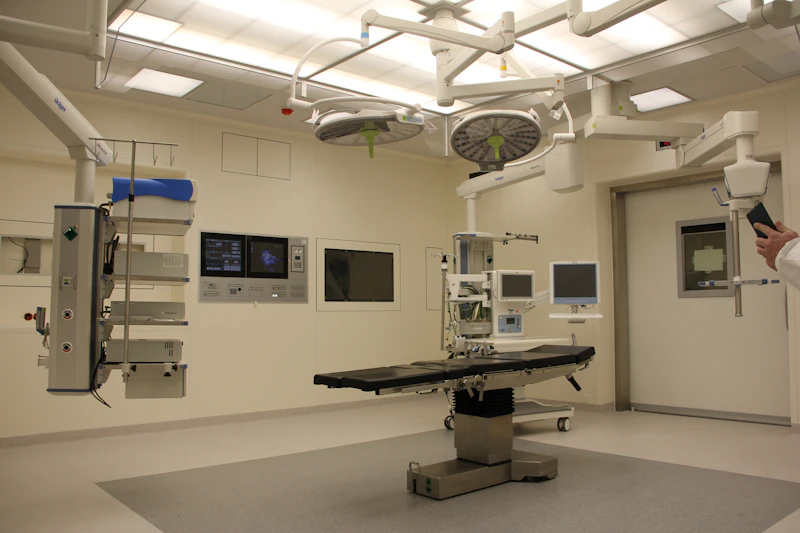
At AREVA, we specialise in advanced interventional pain management for back & spine conditions, using precise, image-guided (C-ARM or IITV) procedures to target the source of pain, providing relief in back pain without the need for major surgery. Many treatments are performed as day-care procedures, enabling patients to return home the same day & resume normal activities with minimal downtime. Our goal: Precise treatment, faster recovery & lasting improvement in quality of life. Facet Joint Block – When pain originates from the facet joints (located between each vertebra), a specific type of injection called a facet joint injection, to diagnose & treat pain by reducing inflammation. The pain, commonly associated with facet arthritis & mechanical back pain. Transforaminal Block / Selective Nerve Root Block – A targeted image-guided injection delivered near an irritated spinal nerve root to reduce inflammation & pain, particularly in conditions such as sciatica, slipped or herniated disc & radicular pain. Medications are injected into the neural foramen, the opening through which the spinal nerve exits the spine, & placed close to the affected nerve root. The medication spreads around the nerve root within the epidural/perineural space, helping to reduce inflammation & relieve pain. Interlaminar Epidural Injection – Medication is injected into the epidural space through an interlaminar approach to help reduce inflammation around spinal nerves. It may be considered for radicular pain, sciatica & selected spinal pain conditions. Medial Branch Block – A precise, image-guided injection around the small medial branch nerves that carry pain signals from the facet joints. It can help determine whether the facet joints are a significant source of back or neck pain & may also be used as part of the treatment pathway toward RF neurolysis. Caudal Epidural Injection – Medication is delivered into the epidural space through the sacral opening at the base of the spine. It may be used for lower back pain, sciatica & certain forms of nerve-root irritation Radiofrequency Ablation (RF Neurolysis) – A minimally invasive procedure that uses controlled radiofrequency energy to interrupt pain signals from selected nerves, most commonly the medial branch nerves supplying painful facet joints. It provides longer-lasting relief in appropriately selected patients. At AREVA At AREVA, we assess slip disc and related spinal nerve pain to identify the likely source of symptoms and develop an individualized treatment plan. Depending on the clinical findings, treatment may include medication, rehabilitation, image-guided epidural injections or selective nerve-root procedures. Our aim is to relieve pain, improve mobility and support recovery while avoiding unnecessary surgery whenever appropriate.
Consult with Dr. Mehul Kubavat
FIPM Germany, FPCI Mumbai | Non-Surgical Spine & Interventional Specialist