
Knee Pain & Osteoarthritis

Department of Interventional Pain Management | AREVA Hospital
Monday to Saturday: 10:30 AM to 1:00 PM & 5:00 PM to 7:00 PM
Phone: +91 799 0420 149 (By Appointment)
Knee pain is a common problem that can affect people of all ages. It may develop suddenly after an injury or gradually due to overuse, age-related changes or degeneration of the knee joint.
Pain may be felt around the knee-cap, inside or outside the knee, or throughout the joint. Depending on the underlying cause, it may be associated with swelling, stiffness, clicking, instability or difficulty in walking.
Causes & Risk Factors
- Knee Osteo-Arthritis (OA) – is a degenerative condition in which the cartilage gradually wear away over time. As the joint changes, the smooth movement between the bones can become affected, leading to pain, stiffness and reduced mobility. Knee OA is more common with increasing age, but it can also develop earlier due to previous injuries, excess load on the joint, obesity, joint abnormalities or repetitive stress.
- Meniscus injuries – The meniscus is a C-shaped piece of cartilage between the thigh bone & shin bone. Each knee has two menisci, which help absorb shock, distribute load & provide stability to the joint. A meniscus injury or tear can occur suddenly during activities involving twisting, turning the knee, particularly during sports or can develop gradually due to age-related degeneration.
- Ligament injuries (ACL, PCL, LCL, MCL) – Ligaments are strong bands of tissue that connect bones and help stabilize a joint. A ligament injury occurs when a ligament is stretched beyond its normal range or torn, commonly due to sports injuries, sudden twisting movements, falls, or direct impact.
- Inflammatory arthritis –
- Rheumatoid arthritis
- Psoriatic arthritis
- Ankylosing spondylitis
- Patellofemoral Pain Syndrome (Runner's Knee) – Pain around the kneecap worsened by squatting, stair climbing, or sitting for long hours.
- Gout – caused by the buildup of uric acid crystals within a joint.
- Bursitis
- Sports & overuse injuries
Symptoms
- Aching or sharp pain in or around the knee
- Pain while walking, climbing stairs or squatting
- Pain after prolonged sitting or standing
- Knee stiffness & reduced movement
- Swelling or inflammation
- Tenderness around the joint
- Clicking, catching or grinding sensations
- Feeling of instability or the knee "giving way"
- Difficulty bearing weight
- Pain that worsens with physical activity
- Reduced ability to perform sports or daily activities

How Knee Pain & Osteoarthritis is Diagnosed?
Diagnosis usually begins with a detailed medical history & clinical examination,
Location & nature of pain
Duration & progression of symptoms
Previous injuries or surgeries
Activities that aggravate the pain
Knee movement & stability
Swelling & tenderness
Alignment & gait
Muscle strength & function
Depending on the clinical findings, investigations may include:
- X-ray – commonly used to assess osteo-arthritis, joint-space changes & bone abnormalities
- MRI – useful for evaluating meniscus, ligaments & other soft tissues
- Ultrasound – useful for selected soft-tissue conditions
- Blood tests – when inflammatory arthritis, gout or infection is suspected
Treatment Options for Knee Pain & Osteoarthritis
1. Conservative Treatment
The goal is not only to reduce pain but also to restore strength, mobility and function.
Activity modification – Reducing or modifying activities that aggravate knee pain.
Pain-relieving medications – Anti-inflammatory, analgesic & antispasmodic medicines having good role in acute stage. They reduce inflammation, pain & spasm in the knee, help you to get to the daily routine.
Muscle strengthening – by Physiotherapy and targeted exercises
Weight management
Ice or heat therapy
Bracing or supportive devices in selected cases
2. Interventional Pain Management
For persistent knee pain that does not respond adequately to conservative treatment
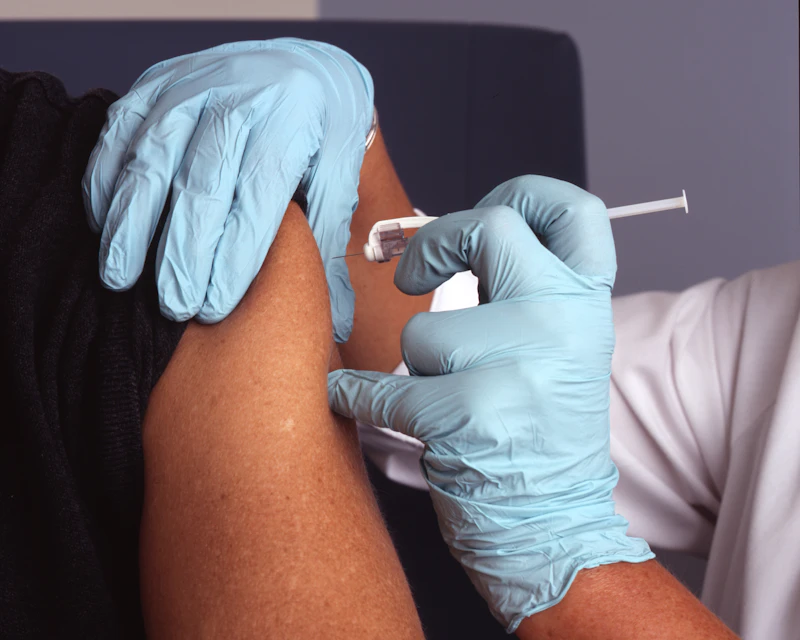
The injection is often performed image-guided (C-ARM or IITV) to accurately position the needle within the joint. By reducing inflammation, it can help improve pain, joint movements & day-to-day function.
The injection is often performed image-guided (C-ARM or IITV) to accurately position the needle within the joint. It reduces knee pain and stiffness. It provides long lasting relief by allowing patients to participate more comfortably in physiotherapy and rehabilitation.
During the procedure, specialized RF needles are positioned near the targeted genicular nerves using real-time imaging guidance. Controlled radiofrequency energy is applied to reduce their ability to transmit pain signals.
It is considered for patients with chronic knee osteoarthritis, particularly when other treatments failed or not ready for knee replacement surgery or surgery is not possible or pain after knee replacement surgery.
At AREVA At AREVA, we provide individualized assessment and treatment for knee pain caused by conditions such as osteoarthritis, persistent inflammation and selected soft-tissue problems. Depending on the patient's condition, treatment may include medication, rehabilitation, image-guided knee injections, Visco supplementation, platelet-rich plasma (PRP) therapy and genicular nerve blocks or radiofrequency ablation for selected patients. Our aim is to reduce pain, improve movement and support a more active lifestyle.
Consult with Dr. Mehul Kubavat
FIPM Germany, FPCI Mumbai | Non-Surgical Spine & Interventional Specialist